Category: Campaign Chronicles

  • Building Barovia: How I’m Bringing Curse of Strahd to the Table

    Building Barovia: How I’m Bringing Curse of Strahd to the Table

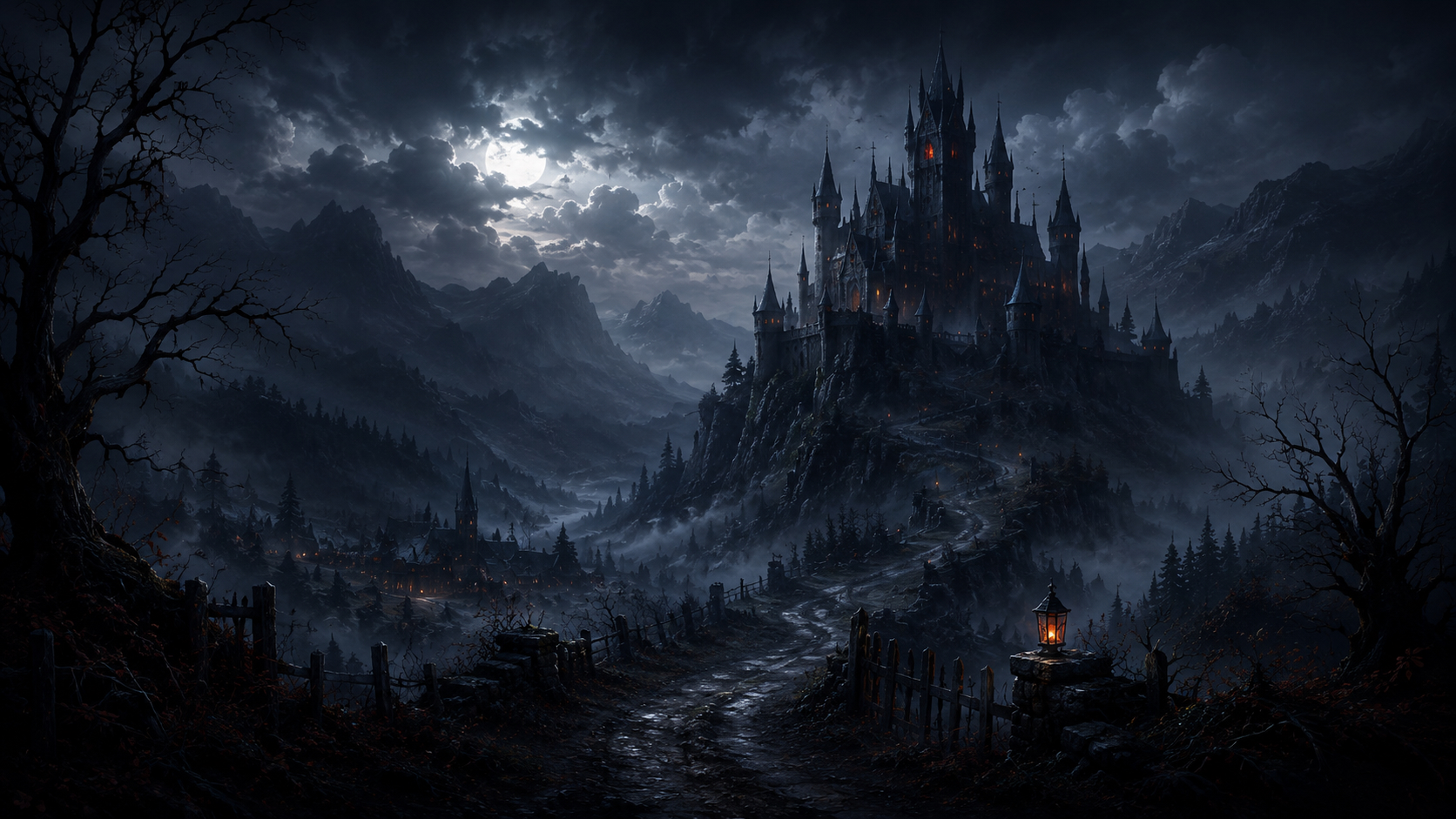
    Castle Ravenloft
    Castle Ravenloft

    There is a dangerous thing that happens when you decide to run Curse of Strahd and you also happen to really like maps, miniatures and terrain.

    You start thinking you need to build Barovia.

    Not metaphorically.

    Actually build it.

    Castle walls. Village streets. Crypts. Graveyards. Haunted houses. Forests. Taverns. Ruined churches. Coffins. Gallows. Furniture. Hundreds of miniatures.

    And because Curse of Strahd may be one of the most visually evocative Dungeons & Dragons campaigns ever written, there is always something else you can buy.

    Over the past several months, I’ve been trying to figure out how I want this campaign to look and feel at my table. I’ve experimented with printed maps. I’ve built rooms with WarLock Tiles. I’ve accumulated undead miniatures. I’ve looked at gothic terrain, buildings, roofs, dungeon systems and some very expensive premium campaign products.

    And somewhere along the way, I realized I was asking the wrong question.

    The question isn’t:

    How do I physically recreate Barovia?

    It’s:

    Which moments in Barovia deserve to become physical?

    That distinction has changed almost everything about how I’m preparing this campaign.

    Death House Taught Me the Problem

    Curse of Strahd - Death House
    Curse of Strahd – Death House

    Death House was my first real experiment.

    I love physical D&D. I like putting miniatures on the table. I like walls around the characters. I like doors that actually open and furniture scattered around rooms.

    Especially in horror.

    There is something very different about telling the players that their characters are descending into a dark basement and actually putting a narrow stone corridor in front of them.

    So naturally, I started building.

    I have a substantial collection of WarLock Tiles, including the Mega-Dungeon sets and various dungeon accessories. They’re fantastic pieces. The walls look great, the doors work, and once everything is assembled the result feels much more like a place than a drawing on a battle mat.

    But Death House revealed two problems very quickly.

    The first was scale.

    My gaming table is about 39 by 82 inches. A properly scaled Death House map with one-inch squares is roughly 34 by 47 inches.

    That’s one house.

    Castle Ravenloft makes Death House look like a garden shed.

    The second problem was prep.

    Building an entire dungeon from WarLock Tiles is cool.

    Building an entire dungeon from WarLock Tiles before every game is something else entirely.

    It takes time. You need enormous numbers of pieces. You inevitably discover that the wall you need is the one wall you ran out of. And once everything is finished, you have to store it, move it, reveal it to the players without exposing half the dungeon, and eventually take the entire thing apart again.

    Death House also taught me something else that I didn’t fully appreciate at first:

    It’s unusually well suited to this treatment.

    It’s a self-contained haunted house. The rooms are relatively small. The dungeon beneath it is compact. The geography matters. Doors, hallways, stairs and room positioning all contribute to the claustrophobic feeling of exploring the place.

    In other words, Death House is one of the relatively few major locations in Curse of Strahd where reproducing almost the entire thing at true miniature scale actually makes sense.

    Once the campaign opens up, that gets harder.

    Barovia becomes villages, forests, wineries, abbeys, ruined mansions, swamps, mountains, temples and, eventually, an enormous castle.

    Trying to give all of those places the Death House treatment would become a campaign unto itself.

    At some point I had to admit something:

    More terrain does not automatically mean a better game.

    Sometimes it means I’ve spent an hour building a hallway my players will walk through in thirty seconds.

    That realization became the foundation for how I’m approaching the rest of Barovia.

    Maps Are Becoming My Foundation

    Rolled up map

    The biggest breakthrough for me has probably been the maps.

    Rather than trying to build every important location entirely out of terrain, I’ve started having the actual Curse of Strahd battlemaps I use through D&D Beyond printed as large physical canvas maps for my table.

    And I love them.

    For most of the maps, I’m aiming for roughly 33 × 44 inches, with some smaller locations around 22 × 33 inches. The important part is preserving something close to a one-inch grid, because I don’t want these to be decorative maps. I want standard miniatures to work naturally on them.

    I worked with a local printer to get the sizing right, measuring the maps so that the grid reproduces at approximately miniature scale. We experimented with different approaches, and canvas quickly became my preferred option.

    It’s durable.

    It rolls up.

    It has a satisfying physical presence when it hits the table.

    And, perhaps appropriately for Curse of Strahd, there is something about unrolling a large canvas map that feels more like revealing an old map than putting down a giant poster.

    More importantly, it solves the problem Death House exposed.

    Instead of rebuilding every wall, room and corridor with plastic terrain, the canvas map can provide the entire architectural foundation of the encounter.

    Then I build up from it.

    Doors.

    Tables.

    Stairs.

    Coffins.

    Rubble.

    Pillars.

    Bodies.

    Trees.

    Walls where sightlines particularly matter.

    And, of course, miniatures.

    The map does the architecture.

    Terrain provides the texture.

    Miniatures provide the characters and threats.

    And my description provides everything else.

    That’s increasingly feeling like the sweet spot for the way I want to run Curse of Strahd.

    Premium Isn’t Automatically Better

    This process has also changed how I think about some of the premium products available for the campaign.

    At one point I was seriously considering spending roughly C$550 on the Beadle & Grimm’s Curse of Strahd set.

    And to be clear: it’s an impressive product.

    There is a tremendous amount of physical material in that box, including a huge collection of maps. For someone who wants a premium, ready-to-run physical presentation of the campaign, I completely understand the appeal.

    But when I looked closely at the maps themselves, I realized something slightly inconvenient:

    I preferred mine (or rather, the DNDBeyond versions of mine).

    Not because the Beadle & Grimm’s maps are badly made. It’s purely an aesthetic preference. I’m simply not particularly fond of the artistic styling they’ve chosen for some of them.

    I prefer the maps I’ve already been using while preparing Curse of Strahd through D&D Beyond.

    They look like my Barovia.

    I’ve spent hours reading the adventure while looking at those locations. I know where things are. I recognize the visual language. And now I can take those same maps, have them printed on canvas at a size that works with my miniatures, and bring that version of the campaign directly onto my table.

    That made me realize that premium doesn’t necessarily mean better for my game.

    I’m obviously willing to spend money on this hobby. But I’m becoming more selective about where I spend it.

    The question isn’t whether something is impressive.

    It’s whether it actually makes the game I’m trying to run better.

    Sometimes the expensive boxed solution will be exactly what I want.

    Sometimes a canvas print from my local printer will make me happier.

    I’m getting much better at recognizing the difference.

    Castle Ravenloft Changes Everything

    Castle Ravenloft is where this philosophy gets its biggest test.

    It is enormous.

    Trying to reproduce the entire castle at true one-inch miniature scale would require a ridiculous amount of table space, an equally ridiculous number of maps or terrain pieces and an extraordinary amount of preparation.

    And I don’t think it would actually improve the game.

    More importantly, I’ve realized that Castle Ravenloft presents two completely different mapping problems.

    The first is exploration.

    Much of Ravenloft is about moving through the castle.

    Characters wander corridors, climb staircases, open doors, enter strange rooms, double back, descend into crypts and gradually develop a mental picture of this enormous gothic labyrinth.

    That doesn’t require every five-foot square to exist physically on my table.

    In fact, I think trying to do that might actually hurt the experience.

    For exploration, the published map scale works perfectly well. I can track the party’s movement behind the DM screen while describing what they see and letting the castle form in their imaginations.

    That’s effectively the strategic map of Ravenloft.

    But then there is the second problem:

    Combat and drama.

    If the party enters the chapel and something terrible is waiting for them…

    If they reach the Heart of Sorrow…

    If they descend into an important section of the catacombs…

    If they enter Sergei’s tomb…

    Or if the Tarokka reading ultimately sends them to some particular room for the final confrontation with Strahd…

    Then suddenly exact positioning matters.

    That’s when I want a tactical map.

    One-inch scale.

    Miniatures.

    Terrain.

    Doors.

    Furniture.

    Elevation where I can create it.

    The whole table changes.

    So Castle Ravenloft isn’t really a choice between physical maps and theatre of the mind.

    It’s both.

    Strategic mapping for exploration. Tactical mapping when combat or drama warrants it.

    And I think that’s going to work far better than trying to reproduce an entire castle just because I technically could.

    It also creates something I’m increasingly interested in using deliberately:

    contrast.

    If every room gets an elaborate physical setup, eventually elaborate becomes normal.

    But if we’ve spent twenty minutes exploring Ravenloft through description and imagination and then I suddenly unroll a massive canvas map, start placing terrain and reach for the miniature case?

    The players immediately know something has changed.

    This place matters.

    That’s exactly the feeling I want.

    Terrain as Set Dressing, Not Architecture

    Gamemat.eu's gothic ruins set
    Gamemat.eu’s gothic ruins set

    That has also changed what kinds of terrain I’m interested in buying.

    Originally, I was looking at terrain primarily as a way to construct locations.

    Now I increasingly think of terrain as set dressing.

    WarLock Tiles are still incredibly useful. Dirt Cheap Dungeons is interesting because it offers another flexible way to create rooms without needing thousands of individual plastic pieces.

    But I’m also much more interested in things that can transform an otherwise flat map.

    A staircase.

    A ruined wall.

    A tomb.

    A statue.

    A fireplace.

    A table covered with food.

    A gallows.

    A pile of bones.

    A few trees.

    A crypt entrance.

    Those things don’t have to reproduce every square inch of the adventure.

    They simply have to make the players believe in the space.

    I’ve bought Gamemat.eu’s gothic terrain with exactly this in mind. The same is true of village-building pieces and roof systems that can give places like Barovia and Vallaki some verticality without requiring me to construct an entire model village.

    I already have things like the Yawning Portal Inn terrain that can be repurposed for tavern interiors and other buildings.

    That’s increasingly how I want the collection to work.

    Not:

    This piece belongs to this encounter.

    But:

    This piece belongs to Barovia.

    Miniatures Are Different

    Miniatures are the area where I’m still willing to get fairly specific.

    Partly because I love them.

    But also because monsters are where physical representation has the greatest tactical value.

    Death House made that obvious.

    I’ve had to make sure I have things like ghouls, shadows, ghasts, a grick, a mimic, ghostly children, a specter, cultists and, eventually, something suitably horrible to represent the shambling mound.

    I’ve also been steadily building out the larger population of Barovia: undead, vampires and other Ravenloft creatures, including WizKids’ Denizens of Barovia and Denizens of Castle Ravenloft collections.

    Here again, though, I’m trying to think in terms of reuse.

    Four good ghoul miniatures aren’t Death House miniatures.

    They’re Barovia miniatures.

    Skeletons, zombies, wolves, ghosts, cultists and vampire spawn are going to appear again.

    Those are easy purchases to justify.

    An incredibly specific creature that appears once for ten minutes?

    Maybe it gets a miniature.

    Maybe it doesn’t.

    And I’m becoming increasingly comfortable with that.

    What I’m Not Doing

    This might actually be the most important part of the entire project.

    I’m learning what not to buy.

    I’m not building a gaming table with an embedded television.

    I’ve considered digital-table solutions, and I use digital tools extensively for preparation—especially D&D Beyond Maps and, when I want more automation, Foundry.

    But I don’t want my home game centred around a television screen.

    I like dice.

    I like miniatures.

    I like players physically moving characters around a map.

    I want this particular campaign to feel tactile.

    I’m also not trying to physically build the entirety of Castle Ravenloft.

    I’m not buying custom terrain for every cabin, road encounter and abandoned room.

    And I’m not automatically buying the most elaborate version of something simply because it exists.

    That’s probably the biggest shift in my thinking.

    When I started preparing Curse of Strahd, there was a part of me that looked at premium terrain, collector’s editions and giant campaign boxes and thought:

    Well, obviously the ultimate version of this campaign requires the ultimate version of all this stuff.

    It doesn’t.

    The best version of Barovia isn’t necessarily the one that costs the most money.

    It’s the one where the things I put on the table actually contribute to the experience.

    I don’t really want someone else’s complete physical version of Barovia.

    I want to build my version of it.

    Slowly.

    Selectively.

    So Which Locations Get Canvas Maps?

    This list will undoubtedly change as the campaign develops, but these are the locations I’m currently most interested in giving proper physical maps – or particularly elaborate physical treatment.

    Definitely

    • Death House – the prototype, and probably the best example of an entire location that works at miniature scale.
    • Old Bonegrinder – compact, memorable and almost guaranteed to become an important encounter.
    • The Coffin Maker’s Shop – exactly the kind of smaller location where tactical geography could suddenly matter a great deal.
    • The Wizard of Wines – a major encounter location with enough moving parts to benefit from having the battlefield clearly represented.
    • Yester Hill – visually dramatic, tactically interesting and almost begging for terrain.
    • Argynvostholt – another location where selective physical presentation could make the place feel much more substantial.
    • The Abbey of Saint Markovia – strange enough, important enough and memorable enough to deserve something special.
    • Berez – swamp terrain, ruined buildings and Baba Lysaga offer enormous potential for a fantastic table.
    • The Amber Temple – one of the defining locations of the campaign and exactly the sort of place where I want the physical table to reinforce its importance.

    Castle Ravenloft

    Ravenloft gets its own category because I don’t intend to print the entire castle at one-inch scale.

    Instead, I want tactical maps available for the rooms that become important in our campaign.

    That might include:

    • The chapel
    • The dining hall
    • The audience hall
    • The Heart of Sorrow
    • Important portions of the catacombs
    • Sergei’s tomb
    • Any room identified by the Tarokka reading as especially significant
    • And, obviously, wherever the final confrontation with Strahd ultimately happens

    Some of those maps may never come out.

    That’s fine.

    The point isn’t to put every map I’ve made onto the table.

    The point is to have the right one when the moment deserves it.

    Probably Not

    And then there are all the places that don’t need bespoke physical maps at all.

    A random road encounter in the Svalich Woods?

    I have forest terrain.

    A fight in an unnamed cottage?

    Generic interiors work.

    A crossroads?

    A clearing?

    A small crypt?

    A campsite?

    A minor encounter on a village street?

    Those can happen on reusable battlemats, generic terrain or entirely through theatre of the mind.

    Not every place needs to become an artifact.

    The places that matter can.

    The Table Is Part of the Story

    I think that’s the biggest lesson I’ve learned from all of this.

    Maps, terrain and miniatures aren’t the game.

    They’re tools for controlling attention.

    When the players walk into an ordinary room, maybe I describe it.

    When something starts moving in the darkness, maybe a few miniatures appear.

    When they enter one of the defining locations of the campaign, suddenly a massive canvas map rolls across the table and the terrain comes out.

    That’s storytelling.

    The physical table becomes another way of changing the camera angle.

    And because I’m not trying to make every moment visually spectacular, I can spend more time – and money – making the important moments unforgettable.

    That’s the Barovia I want my players to remember.

    Not a perfectly reconstructed model of every building Strahd von Zarovich owns.

    A foggy road imagined in their heads.

    A tavern assembled from familiar terrain.

    A graveyard appearing beneath their miniatures.

    A dungeon slowly filling with ghouls and shadows.

    A swamp covered in ruins as Baba Lysaga’s hut rises in front of them.

    And then, much later, the moment when they finally enter a room in Castle Ravenloft and realize from what I’ve put in front of them:

    Oh.

    This is where it’s going to happen.

    I’m still building Barovia.

    I’m just learning that I don’t need to build all of it.


    How do you handle maps and terrain in your games? Do you build elaborate encounters, use printed battlemaps, play mostly theatre of the mind—or, like me, keep changing your mind and buying more miniatures anyway?
  • Preparing for Game Night: Inside My DM Prep Process

    Preparing for Game Night: Inside My DM Prep Process

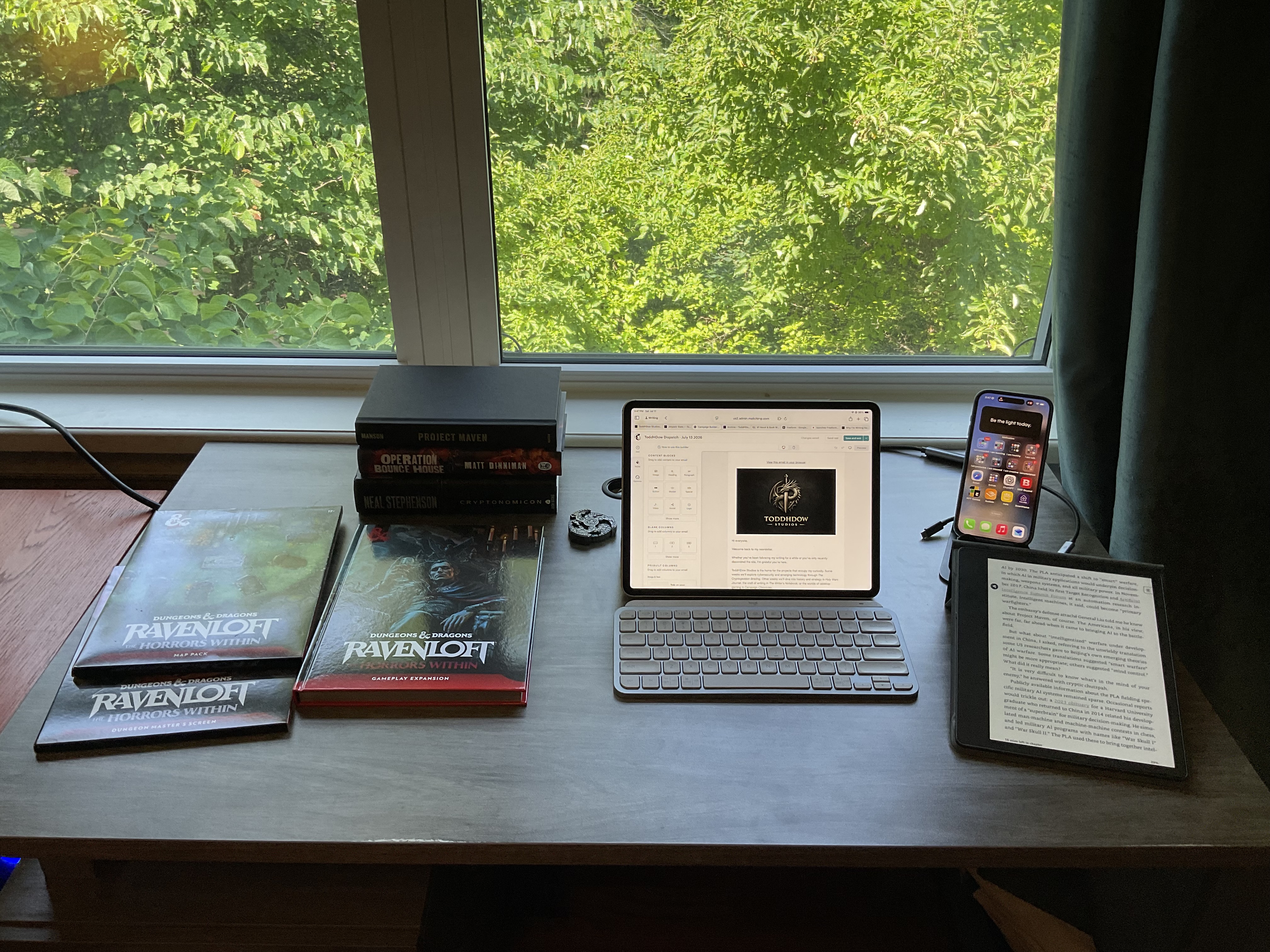
    My writing setup. This is where I do the bulk of my writing. My desk overlooks our beautiful backyard. In the summer, it is a forest of trees and greenery. In the winter, the leaves all disappear and I get a great view of our large backyard. I like the winter view better because without the tree cover, I am often able to catch glimpses of rabbits and deer wandering through our backyard.
    My writing setup. This is where I do the bulk of my writing. My desk overlooks our beautiful backyard. In the summer, it is a forest of trees and greenery. In the winter, the leaves all disappear and I get a great view of our large backyard. I like the winter view better because without the tree cover, I am often able to catch glimpses of rabbits and deer wandering through our backyard.

    One of the questions I get asked most often is surprisingly simple:

    “How much prep do you actually do before a session?”

    The honest answer?

    Less than I used to.

    That probably sounds strange coming from someone who loves worldbuilding, campaign design, and collecting maps, books, miniatures, and terrain. But over the last year or so I’ve realized that good prep isn’t about creating more material – it’s about creating the right material.

    The players are going to surprise me anyway.

    My job isn’t to predict everything they’ll do. My job is to know the world well enough that I can respond naturally when they inevitably wander off the path I expected.

    Here’s what my preparation process looks like before most game nights.

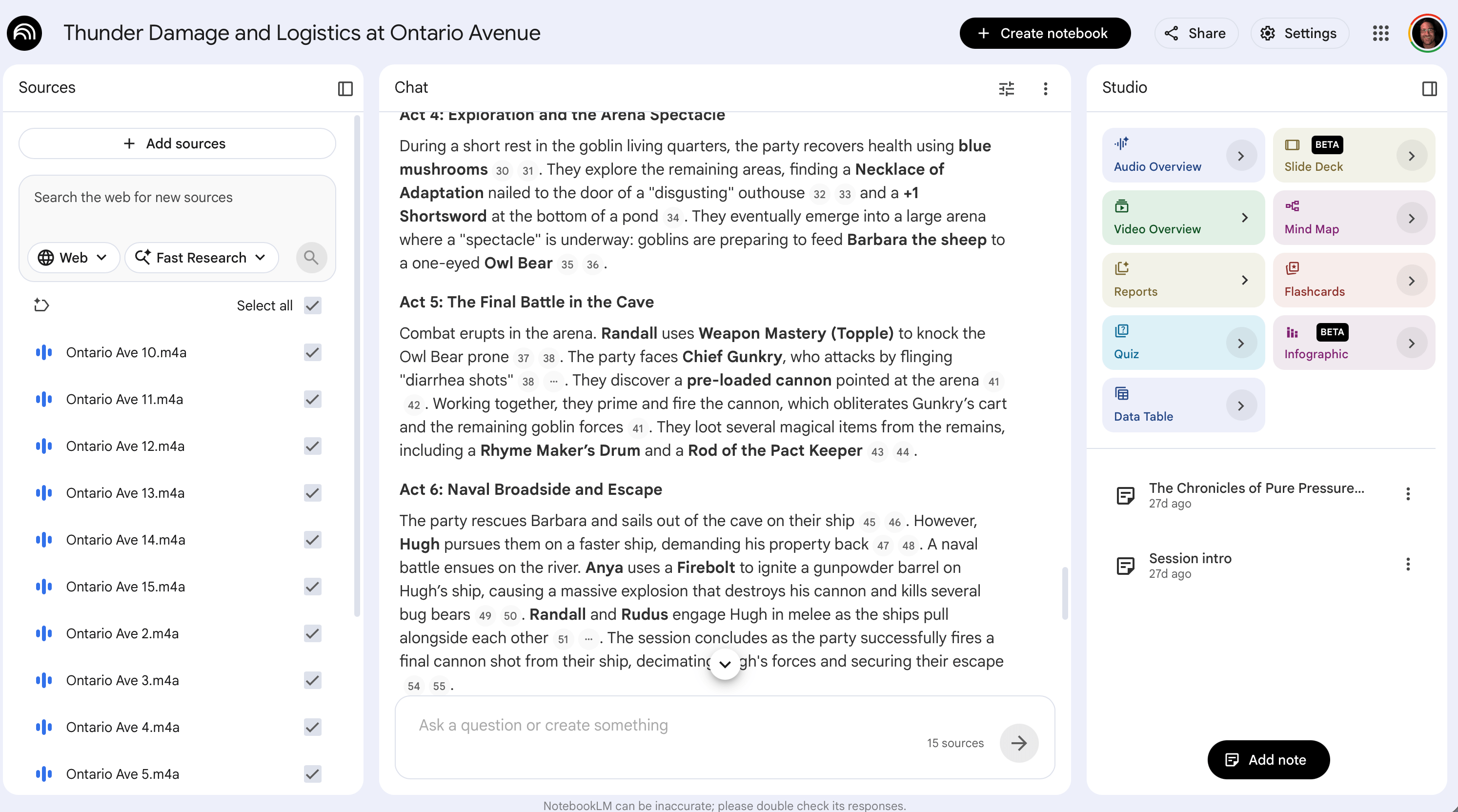
    NotebookLM summary of a recent D&D adventure session
    NotebookLM summary of a recent D&D adventure session.

    Step 1: Review the Last Session (if there was one)

    I never begin by opening my adventure book.

    Instead, I revisit what happened last session.

    One of the biggest improvements to my workflow has been recording my games and uploading them into NotebookLM. It transcribes the session, removes most of the table chatter, and gives me a surprisingly accurate summary of everything that happened. (I will definitely write more about this whole process in a future blog post!)

    Sometimes I’ll ask questions like:

    • What NPC promises are still unresolved?
    • Which plot hooks did the players ignore?
    • What clues did they discover?
    • Which character moments seemed important?

    It’s remarkable how often players accidentally create future story threads that I hadn’t planned.

    Those become some of the best parts of the campaign.

    Shadows of Sithicus D&D Encounter
    Shadows of Sithicus D&D Encounter

    Step 2: Decide What Matters

    I don’t prepare five different adventures.

    I prepare the one that’s most likely.

    If the party is halfway through Death House, that’s where my attention goes.

    If they’re travelling toward the Misty Forest, I prepare the Misty Forest.

    If there’s a reasonable chance they’ll completely derail the session…

    … I spend a little time preparing that possibility too.

    Experience has taught me that trying to prepare every possible outcome is impossible.

    Preparing the most probable outcome – and understanding the world around it – is far more effective.

    Step 3: Brainstorm with AI

    This is probably where my process has changed the most of the last year.

    I use AI extensively—not to replace my creativity, but to challenge it.

    I’ll ask questions like:

    • What motivations would this NPC realistically have?
    • Give me five encounter ideas that fit this location.
    • What clues would make this mystery more satisfying?

    Most of the suggestions never make it into the game.

    But one good idea out of twenty is worth the conversation.

    It’s like having another experienced Dungeon Master sitting beside me while I prep.

    Canvas maps and a Devil's playground.
    Canvas maps and a Devil’s playground.

    Step 4: Build the Table Experience

    This is the fun part.

    I’ll gather whatever I need for the session:

    • Maps
    • Miniatures
    • Terrain
    • Handouts
    • Letters
    • Props
    • Music
    • Ambient sound

    I’m a big believer that immersion comes from lots of small details rather than one expensive centerpiece.

    A weathered letter with a wax seal.

    A faded map.

    The right soundtrack.

    A miniature that perfectly represents the villain.

    None of these things are essential.

    Together, they make the world feel real.

    Step 5: Review the Rules

    Every session has one or two mechanics that deserve a refresher.

    Maybe a monster with unusual legendary actions.

    Maybe a spell interaction I haven’t seen in months.

    Maybe grappling.

    I don’t try to memorize every rule in D&D.

    Instead, I identify the handful of rules that are likely to matter in my next game.

    That dramatically reduces the number of pauses during play.

    The prep ends here. From this moment on, the players decide where the story goes, and I simply follow their lead—one decision, one surprise, and one dice roll at a time.
    The prep ends here. From this moment on, the players decide where the story goes, and I simply follow their lead—one decision, one surprise, and one dice roll at a time.

    Step 6: Prepare to Improvise

    This might sound contradictory after everything I’ve just described.

    But the goal of preparation isn’t to avoid improvisation.

    It’s to improvise with confidence.

    Once I know:

    • the NPCs,
    • the locations,
    • the motivations,
    • the likely encounters,
    • and the important rules,

    I’m comfortable throwing my notes aside if the players decide to do something unexpected.

    And they always do.

    Some of our most memorable sessions have come from moments I never could have prepared for.

    My Actual Prep Time

    People often imagine Dungeon Masters spending twenty hours every week preparing.

    Sometimes that’s true.

    Usually it isn’t.

    A typical weekly prep session for me looks something like this:

    • 20 minutes reviewing last session
    • 30 minutes brainstorming ideas
    • 30 minutes preparing encounters
    • 20 minutes gathering maps and assets
    • 20 minutes reviewing rules

    Roughly two hours.

    Some weeks it’s less.

    Some weeks—especially before major story arcs—it can be considerably more.

    But consistency beats marathon prep sessions every time.

    Dice. Maps. Miniatures. Character sheets. A laptop full of plans. Every session starts with the same tools - but no two adventures ever unfold the same way.
    Dice. Maps. Miniatures. Character sheets. A laptop full of plans. Every session starts with the same tools – but no two adventures ever unfold the same way.

    The Real Secret

    The biggest lesson I’ve learned isn’t about AI.

    It isn’t about terrain.

    It isn’t about miniatures.

    It isn’t even about preparation.

    It’s about trusting your players.

    Players don’t remember perfectly balanced encounters.

    They don’t remember every stat block.

    They remember impossible choices.

    Unexpected victories.

    Hilarious failures.

    The NPC who somehow became their favourite character despite only appearing for five minutes.

    That’s the magic we’re trying to create.

    Everything else is just preparation for those moments.

    What’s Next?

    Over the next few months I’ll be sharing more behind-the-scenes looks at how I run games, the tools I’m experimenting with, AI workflows that have genuinely improved my prep, and lessons I’ve learned from both successful sessions and spectacular failures.

    If you’re a Dungeon Master – or you’re thinking about becoming one – I hope some of these ideas help make your own game nights just a little easier to run.

    And if your players completely derail your carefully prepared session next week…

    Welcome to the club.

    And lastly, what did I miss? If I’ve overlooked anything, please do share in the comments below!

  • How I Use AI to Become a Better Dungeon Master

    How I Use AI to Become a Better Dungeon Master

    Artificial Intelligence has become one of the most valuable tools behind my DM screen.

    Whenever I mention that, people tend to assume one of two things. Either they think AI is somehow running my games for me, or they think it’s a gimmick that produces generic fantasy content.

    In reality, it’s neither.

    AI doesn’t replace my creativity. It amplifies it.

    It doesn’t run my campaigns. It helps me spend less time on administrative work and more time creating memorable experiences for my players.

    As both a professional in the cybersecurity industry and a lifelong Dungeons & Dragons enthusiast, I’ve spent a lot of time experimenting with AI tools. Some have been useful. Some have been disappointing. But over the past year, I’ve developed a workflow that has become a permanent part of how I prepare and run games.

    These are the five areas where AI has had the biggest impact on my Dungeon Mastering.


    1. Session Recaps and Campaign Memory

    If you’ve ever run a long campaign, you know that one of the biggest challenges isn’t creating content—it’s remembering everything that has already happened.

    Players forget details.

    Dungeon Masters forget details.

    That mysterious NPC from six months ago suddenly becomes important again, and everyone is frantically searching through old notes trying to remember who they were.

    This is where AI has become an absolute game changer.

    For my games, I record sessions and upload the recordings to NotebookLM. It automatically transcribes the audio and produces surprisingly accurate summaries of what happened during the session.

    What impresses me most isn’t the transcription. It’s the understanding.

    Anyone who has played D&D knows that a four-hour session isn’t four hours of story. There are side conversations, jokes, pizza discussions, technical issues, and random tangents.

    NotebookLM does an excellent job separating the signal from the noise.

    It identifies the important story beats, character decisions, combat outcomes, discoveries, clues, and roleplaying moments while largely ignoring the table chatter that isn’t relevant to the campaign.

    The result is a clean summary that I can reference later.

    I’ve also experimented with Claude and ChatGPT for campaign summaries, and both work very well once I have a transcript. However, NotebookLM is currently the only tool in my workflow that allows me to start with the raw session recording itself.

    The practical result is simple:

    My campaign notes are dramatically better than they used to be.

    I can quickly review previous sessions, refresh my memory before game night, and maintain continuity across long-running campaigns without spending hours writing notes after every session.


    2. Campaign Planning, NPC Development, and Encounter Design

    This is probably where AI saves me the most preparation time.

    One of the biggest misconceptions about AI is that it generates creativity.

    I don’t think that’s true.

    What it does exceptionally well is stimulate creativity.

    Every Dungeon Master has experienced creative roadblocks.

    You know where the story is going, but you’re not sure how to connect the dots.

    You have a villain, but their motivation feels weak.

    You have a dungeon, but the encounters feel repetitive.

    AI is an outstanding brainstorming partner.

    I regularly use it to explore:

    • Villain motivations
    • Political intrigue
    • Faction relationships
    • Campaign twists
    • Adventure hooks
    • Character backgrounds
    • Quest complications
    • Alternative story paths

    The same applies to NPCs.

    When players inevitably become fascinated by the one random merchant or tavern owner you never expected them to care about, AI can help generate personality traits, goals, fears, secrets, and relationships within minutes.

    Encounter design benefits as well.

    Rather than simply asking, “How many monsters should be in this room?” I can explore questions like:

    • What tactics would these creatures realistically use?
    • How would an intelligent villain prepare for this battle?
    • What environmental hazards would make this encounter more memorable?
    • What objectives exist besides defeating every enemy?

    The final decisions are always mine.

    But AI helps me explore possibilities much faster than I could on my own.


    3. Handouts, Letters, and Props

    One of the easiest ways to increase immersion in a campaign is to give players something tangible.

    A letter.

    A journal.

    A proclamation.

    A wanted poster.

    A cryptic note discovered in an abandoned ruin.

    The problem is that creating convincing props takes time.

    AI dramatically accelerates this process.

    Need a centuries-old journal entry from a doomed explorer?

    A noble’s formal letter to a rival family?

    A cultist’s encoded message?

    A desperate plea for help written during a siege?

    AI can produce a strong first draft in seconds.

    I still edit the final result to ensure it fits my campaign, but starting from a solid draft is much faster than staring at a blank page.

    For horror campaigns like Curse of Strahd or other Ravenloft adventures, this has been especially useful.

    Handouts make the world feel real.

    Players engage differently when they’re holding a physical document instead of simply listening to a description.

    AI allows me to create more of those immersive moments with significantly less preparation time.


    4. Generating Artwork

    I love visual aids.

    The challenge is that I am a writer, not an artist.

    Historically, Dungeon Masters had limited options for custom artwork.

    You could draw it yourself.

    Commission an artist.

    Search endlessly online hoping someone had already created something similar.

    Or simply go without.

    AI-generated art has changed that.

    Today I can create custom artwork for:

    • NPC portraits
    • Villains
    • Magic items
    • Cities
    • Taverns
    • Dungeons
    • Campaign scenes
    • Adventure handouts

    The most valuable aspect isn’t necessarily the quality of the art.

    It’s the specificity.

    When I create a completely original NPC, there usually isn’t existing artwork available that perfectly matches my vision.

    AI allows me to create visuals tailored specifically to my campaign.

    That means players are seeing my villain, not a random image pulled from a Google search.

    The same applies to locations, artifacts, and story moments.

    The world becomes more visually cohesive and immersive because the artwork is built specifically for that campaign.


    5. Answering Questions During the Game

    This might be the most underrated use of AI.

    Players ask questions.

    A lot of questions.

    Some are rules questions.

    Some are lore questions.

    Some are questions about events that happened twenty sessions ago.

    Others are questions that come completely out of nowhere.

    No Dungeon Master can remember everything.

    AI has become an incredibly useful assistant for helping answer questions quickly.

    Need clarification on a rules interaction?

    Need to remember the name of an NPC from months ago?

    Need to verify a piece of Forgotten Realms lore?

    Need a quick summary of a faction’s history?

    AI can often provide the answer faster than digging through books, notes, websites, and PDFs.

    That doesn’t mean I blindly trust every response.

    Like any tool, AI occasionally makes mistakes.

    But as a first-pass research assistant, it has become remarkably useful.

    In many cases it helps keep the game moving rather than bringing the session to a halt while everyone searches for information.


    The Real Value of AI for Dungeon Masters

    The biggest lesson I’ve learned from using AI is that it doesn’t replace the role of the Dungeon Master.

    It removes friction.

    The creativity still comes from me.

    The storytelling still comes from me.

    The worldbuilding still comes from me.

    The emotional moments, dramatic reveals, and memorable victories still happen between real people sitting around a table.

    What AI does is eliminate some of the busywork that gets in the way.

    It helps me remember more.

    Create more.

    Prepare more efficiently.

    And ultimately deliver a better experience for my players.

    That’s why AI has earned a permanent seat at my gaming table—not as the Dungeon Master, but as the Dungeon Master’s assistant.