Tag: God

  • The God Solution – available now on Kobo and Amazon!

    The God Solution – available now on Kobo and Amazon!

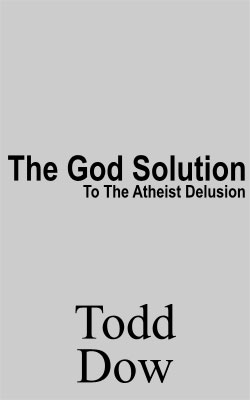
    The God Solution on Amazon.comThe God Solution on Kobobooks.comMy first published book is now available for purchase as an ebook on both Amazon and Kobo. This means that you can read it on pretty much any device out there (ipod, iphone, android, etc.)

    Here’s a synopsis of the book:

    In 2008, Richard Dawkins wrote a book called “The God Delusion”. The book offered a controversial critique of belief in God. I felt that his critique was flawed on numerous fronts. This book is a summary of my thoughts and a defence of my faith.

    Richard Dawkins’ book, The God Delusion, has become a go to source for Atheists when they attempt to dispel the validity of religion. Unfortunately, Dawkins’ arguments are flawed. In this thought provoking book, Todd Dow refutes The God Delusion through a thorough analysis of Dawkins’ arguments. Chapter by chapter, I pinpoint the issues with Dawkins’ arguments, outlining the flaws in Dawkins’ logic and offering valid and sound responses to each of the issues that Dawkins addresses.

    The following topics are addressed:
    Straw Men – Dawkins’ weak proofs of God
    The Ultimate 747 – Is that the best he’s got?
    Problems with Organized Religion
    The objective roots of morality
    The Historical Jesus
    The problem with fundamentalism
    The slippery slope of abortion
    Why not rid ourselves of religion, politics and economics?
    Childhood abuse and brainwashing
    On evolution and concluding thoughts

    And, as an added bonus, I have included an appendix that contains a thought experiment entitled, “Should Atheists Have Children?”

    Please do go pick up a copy of my book and let me know what you think – feel free to offer your feedback in the comments below and (more importantly) provide your feedback on my book page on Amazon.com or Kobobooks.com.

    Happy reading!

    Todd

  • The God Solution – available now!

    The God Solution

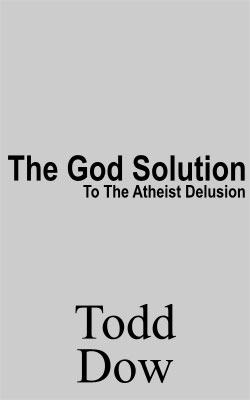
    It’s official! My first published book is now available for purchase.

    The book is now available as an ebook and you can read it on your Kindle or on the Kindle Reader, which works on pretty much every device out there (ipod, iphone, android, etc.).

    In 2008, Richard Dawkins wrote a book called “The God Delusion”. The book offered a controversial critique of belief in God. I felt that his critique was flawed on numerous fronts. This book is a summary of my thoughts and a defence of my faith.

    Richard Dawkins’ book, The God Delusion, has become a go to source for Atheists when they attempt to dispel the validity of religion. Unfortunately, Dawkins’ arguments are flawed. In this thought provoking book, Todd Dow refutes The God Delusion through a thorough analysis of Dawkins’ arguments. Chapter by chapter, I pinpoint the issues with Dawkins’ arguments, outlining the flaws in Dawkins’ logic and offering valid and sound responses to each of the issues that Dawkins addresses.

    The following topics are addressed:
    Straw Men – Dawkins’ weak proofs of God
    The Ultimate 747 – Is that the best he’s got?
    Problems with Organized Religion
    The objective roots of morality
    The Historical Jesus
    The problem with fundamentalism
    The slippery slope of abortion
    Why not rid ourselves of religion, politics and economics?
    Childhood abuse and brainwashing
    On evolution and concluding thoughts

    And, as an added bonus, I have included an appendix that contains a thought experiment entitled, “Should Atheists Have Children?”

    Please do go pick up a copy of my book and let me know what you think – feel free to offer your feedback in the comments below and (more importantly) provide your feedback on my book page on Amazon.com.

    Happy reading!

    Todd

  • The God Solution – available soon!

    The God Solution – available soon!

    The God SolutionI am finally publishing a book! My first effort at book writing is currently “in review” at Amazon. I expect it to be available for sale within the next day or so on amazon.com. The book will be available as an ebook and you’ll be able to read it on your Kindle or on the Kindle Reader, which works on pretty much every device out there (ipod, iphone, android, etc.).

    In 2008, Richard Dawkins wrote a book called “The God Delusion”. The book offered a controversial critique of belief in God. I felt that his critique was flawed on numerous fronts. This book is a summary of my thoughts and a defence of my faith.

    Richard Dawkins’ book, The God Delusion, has become a go to source for Atheists when they attempt to dispel the validity of religion. Unfortunately, Dawkins’ arguments are flawed. In this thought provoking book, Todd Dow refutes The God Delusion through a thorough analysis of Dawkins’ arguments. Chapter by chapter, I pinpoint the issues with Dawkins’ arguments, outlining the flaws in Dawkins’ logic and offering valid and sound responses to each of the issues that Dawkins addresses.

    The following topics are addressed:
    Straw Men – Dawkins’ weak proofs of God
    The Ultimate 747 – Is that the best he’s got?
    Problems with Organized Religion
    The objective roots of morality
    The Historical Jesus
    The problem with fundamentalism
    The slippery slope of abortion
    Why not rid ourselves of religion, politics and economics?
    Childhood abuse and brainwashing
    On evolution and concluding thoughts

    And, as an added bonus, I have included an appendix that contains a thought experiment entitled, “Should Atheists Have Children?”

    Stay tuned – I’ll update my blog as soon as the book is available for sale.

    Todd


  • Responses to Dawkins Comments – Part 4 of 4

    And now, back to Part 5: The Historical Jesus.

    Robert took the time to provide some good questions in response to my post. Robert, thanks for these questions. I appreciate the time that you took to engage in this discussion. I hope that my answers are sufficient.

    Robert asked: “You wrote, The most recent scholarship has not only further confirmed the accuracy of the New Testament texts, but it has also uncovered additional documentation to support the existence of Jesus Christ in the first century. The book you imply as “most recent scholarship” is Jesus as a Figure in History. which was published in 1998. This constitutes “most recent scholarship”? In truth, recent scholarship has vastly undermined the accuracy of the NT texts, and even of Jesus’s historicity. Books by Robert M. Price are especially compelling.”

    My response: My apologies if you thought the 1998 text that I referred to was THE most recent scholarship. There is plenty of recent scholarship, much of which does continue to support the claims made by Crossan, Powell and others. I don’t think that your question in any way refutes the evidence.

    Robert asked: “You wrote, There are multiple sources that point to the validity of the Jesus of history, both before and after his resurrection. I would be curious to know of any sources to the validity of the Jesus of history before his alleged resurrection.”

    My response: Ahhh… I’ll take the blame for this one… This was bad writing on my part. I think I worded this part badly. What I was trying to say was that there are multiple sources that write about Jesus both before his crucifixion and after his resurrection. I think you may have read this that I suggested that there are texts from before his death in existence. That’s not what I was claiming at all… I’ll take the blame for this one as bad writing on my part.

    Robert asked: “You wrote, “Can we trust the text of the Bible?”, I suggest the following: Why not? Christianity was built upon Judaism, which maintained an enormous oral tradition for a thousand years. They had the skills to maintain the accuracy of their traditions and they knew how to preserve their scripture. Why not? Because sciences like archeology and geology have essentially refuted major elements of the Bible, like the exodus and a global flood. Ability to preserve scripture doesn’t mean what’s been preserved was accurate.

    My response: Sure, there are competing claims about the historical accuracy of the Old Testament. Christian insiders are constantly arguing over whether the Old Testament is literal or allegorical. Who am I to say which way that argument will go. The important part to me in this post (Part 5: The Historical Jesus) is the accuracy of the gospels. And, as I argue here and elsewhere, I believe that they are solid pieces of first person documentation.

    Robert asked: “You wrote, “But what about the conflicting accounts in the gospels?… I offer the following: The Gospels are not a transcript, but they are an account that eye witnesses wrote down as witnesses. This claim is untrue. The Gospels are certainly NOT an eyewitness account, and are not even written as such.”

    My response: Actually… each Gospel is read from the perspective of someone that witnessed the events. Whether this witness recorded these things with their own hand, or if they handed them down orally does not change the fact that the gospels were first person records of what happened in the life of Christ.

    Robert asked: “You wrote, Each gospel will obviously have a perspective to them. Does this make them inaccurate? No, it just means that they were viewed through a certain lens. The “perspective” does no good in attempting to reconcile the conflicting claims of Jesus’s lineage or the date of his birth, to give just a couple examples.”

    My response: I agree. But that does not mean that they are useless either. Major themes throughout the gospels are reinforced through the multiple attestation that we see running through all of the gospels. This in itself strengthens the argument in support of these first person sources as valid historical documents.

    Robert asked: “You wrote, As religious scholars agree, the canon that we recognize today as the New Testament was complete and circulating together as a “package” by the end of the first century. Perhaps religious scholars agree, but historical scholars would laugh at this assertion.”

    My response: Religious scholars include plenty of historical scholars. Religious studies scholars adhere to the same academic and research standards as any other history researcher. I don’t understand your distinction here as I view the two in the same light.

    Robert asked: “You wrote, And finally, people suggest that the New Testament didn’t contain the earliest sources or that the church mixed and matched scripture in order to meet their own “agenda”. Nothing could be farther from the truth here. Scholars cannot pinpoint firm or exact dates when the early Christian writings were made; instead, they posit a range of dates. It is not true that texts were excluded because they were “late”. Many writings were not included, even though they’re dated around the same time as the canonical texts. You wrote, The content and structure didn’t match with the other books in the New Testament. The Gospel of John does not match the other Gospels, but was included anyway, so obviously this criterion was not used either.”

    My response: Fair enough… I failed to include a complete explanation of the process of how the canon was collected. Thanks for adding this additional information. As for the Gospel of John being different… yes, it is quite different stylistically, but it does still hold to the same basic message of Jesus.

    Robert asked: “You wrote, Josephus, a Jewish historian of the first century, mentioned Jesus. You failed to note that many consider these mentions to be interpolations by later Christians, in whole or in part.”

    My response: I don’t feel the need to dispute this as it is a disputable claim.

    Again, thanks Robert for your comments and questions. It is this type of careful eye that I appreciate in my writing. You are keeping me honest and ensuring that I don’t overstate my evidence. If/when I decide to write for the purpose of being published, you’d make a great proofreader and editor to have on hand ot keep me honest.

    Now, to further support my support for the historical Jesus, I’d like to spend a few days presenting a paper that I recently submitted for school entitled, “Critique of “In Defense of Atheism” by Michel Onfray, Specifically “The Construction of Jesus” (pg 115 to 129)”.

    Stay tuned for more!

    Todd

  • Responses to Dawkins Comments – Part 3 of 4

    Some good points were made at the end of my last post in this series: Dawkins Part 10: On Evolution and Concluding Thoughts. I offer the following responses:

    The evidence… here we are again… always looking for the smoking gun. Well… I’m sorry… I’ve provided some discussion on the historical Jesus. We’ve looked at some primary sources as well. While I cannot with 100% certainty provide proof that God exists or that Jesus walked the earth, I can say that the evidence that I have been presented with is sufficient for me to believe. The rationalist critique of religion has provided a healthy discussion on the subject of God’s existence. I appreciate the tighter discussion of God that has resulted from this more stringent set of rules pertaining to evidence.

    Unfortunately, an ironic shift has occurred as a result of this “modern” approach to religion. Nietzsche, one of the stronger and more influential voices in the atheistic discussion of the last couple of hundred years, prophetically spoke in his story, The Parable of the Madman. In this story, the madman runs screaming through the streets looking for God. He rants on and on, telling the gathered crowds that we (the modern scientific man) have killed God. He goes on to say, “Must we ourselves not become gods simply to appear worthy of it? [killing God]” And here is the irony… In all of this discussion of God and atheism, we, as learned individuals, have become Gods unto ourselves.

    One of the responses to my Part 10 post plays perfectly into this discussion. Urbanshutter argued, “It is man that decides what is write and wrong, in the God force realm there is no such thing because so such need exists.” (the spelling mistakes in the quote are his) This is exactly the kind of thing that Nietzsche was arguing about. In sidelining God, we become Gods unto ourselves.

    Urbanshutter, I appreciate your comments. They were full of insight and I in some ways do subscribe to them. I hope you don’t mind that I used your response to help prove my point. It was meant most respectfully.

    Ultimately, we must be careful not to make ourselves into God. If we are theists, then we must continue to look to God and not become God ourselves. And for those that are atheists, isn’t it suicidal to kill God, especially if you purport to be God yourself?

    My final comment is directed to Dave. And Dave, I really appreciate your comments throughout this series. They’ve kept me on my toes and knowing you’ve been reading has really motivated me to put my all into this series. Now, to respond to your points in Part 10 of my series.

    First, you suggest: “If we can’t modermize this portion, why can’t we modernize other portions of the bible like allowing women be priests, or priests to marry, or allowing for gays. This was a new religious theory made by man not god. Science at least allows for itself to be corrected and modernized in a consistent manner, religion does it in ways that suit the institution, not man or God.”

    My response: I agree with you on this point. You’re coming at this from a Catholic perspective, with the women priests, priests being married and allowing for gays. Other denominations struggle with these issues as well. I would like to think that I am more progressive than most in the church. For me, the answer to these questions can be found in the heart of Jesus’ message of love and peace. He tells us to love our neighbour as we love ourself. I agree with this and I try to live my life this way. It is unfortunate that “church governance” gets in the way of living out this life of love sometimes.

    Next, you ask: “As for comments on Love and Free Will. Once again, why does the fact that science cannot specifically explain these things mean that there must be a god?”

    My response: I don’t see this as binary. I was simply pointing out some problems that science fails to address. And, I was showing how religion fills these gaps. I think the two (science and religion) can be helpful to one another. If anything, I think that it is science that is attempting to be binary.

    Dave’s final comment: “If you need a God to believe in to be a good person, than so be it. My issue has always been with organized religion. If God/Jesus did exist I genuinely believe he did not wish for the way organized religion has conducted itself over the centuries.”

    My response: “If you need a God to believe in to be a good person, than so be it. My issue has always been with organized religion. If God/Jesus did exist I genuinely believe he did not wish for the way organized religion has conducted itself over the centuries.” (Thanks Dave. I couldn’t have said it better myself!)

    Thanks to everyone that has made this such an enjoyable series for me. Your comments, questions and critiques have been quite appreciated. I think it is important to question what we believe. For me, this is an important step in my faith journey. It helps me to solidify my beliefs which makes me more certain of my convictions and my sense of self.

    “Now faith is being sure of what we hope for and certain of what we do not see.” – Hebrews 11:1.

    Todd