Tag: atheist

  • The God Solution – Chapter 4 – The objective roots of morality

    The God Solution – Chapter 4 – The objective roots of morality

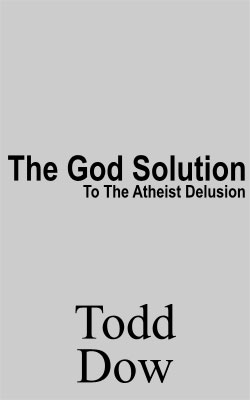
    The God Solution on Amazon.comThe God Solution on Kobobooks.com

    At every turn, Dawkins seems to mess up a perfect opportunity to have an intelligent discussion about God. Chapter 6 is titled, “The roots of Morality: Why Are We Good?” and this is a great place to discuss the ultimate goal or purpose of God. Unfortunately, Dawkins squanders this opportunity. Instead of arguing against the need for God in the moral equation, Dawkins spends his time distracting us from the task at hand, instead offering up several anecdotal experiences to support his claims. This is yet another failed attempt by Dawkins to convince the reader of his claims. And, with more poor logic in this chapter, Dawkins further harms his overall goal of convincing the reader of the atheistic worldview.

    In this chapter, I’ll highlight some of the errors in Dawkins’ logic, then I’ll provide my commentary on where morality must come from in order to be useful within the world at large. So, without further ado, here we go!

    Dawkins starts by providing some examples of negative emails that have been sent to him. These letters were supposedly written by Christians and they were quite offensive and threatening. In my view, these types of letters go against everything that Christianity represents. I’m not quite sure what Dawkins’ point is here, because it would be silly to argue that these letters represent all Christians. And, it would be silly to suggest that these letters have any moral grounding in the writing of Christ. Note: the letters that he quotes do not provide a coherent argument that grounds itself in New Testament theology. Thus, they don’t really count as accurate representations of sound Christian doctrine. To me, and I’m sure to many of you, these letters are simply the work of individuals who may or may not be misguided in the pursuit of their faith. And, in case Dawkins was suggesting that misbehaving Christians mean that God is not the answer to moral grounding, well… I’ve received my fair share of disrespectful and violently offensive emails from atheists. So Dawkins, I hate to disappoint, but I don’t get your point here. It seems that you’re barking up the same tree that I discussed yesterday: bad representatives do not mean that the faith itself is flawed.

    After this rather pointless introduction, Dawkins makes the argument that our morality is pre-programmed within us. He suggests that we have within ourselves an innate altruism (behaviour where we put the needs of others above our own needs – charity, good will, etc.). This innate altruism is, according to Dawkins, beneficial to our survival and growth as a species. It is part of the genetic make-up of the “survival of the fittest”, so to speak. Dawkins explains that this type of altruism benefits the individual by inspiring similar acts of altruism to be returned to the person giving the charity to others. Ultimately, this altruism results in greater benefits for the individual in question, thus extending the success and prosperity of the altruistic individual. This suggests to me that Dawkins version of altruism is self-beneficial and is thus, not necessarily altruistic after all.

    To read the rest of this chapter and the rest of The God Solution, please visit your favourite ebook seller: amazon.com, amazon.ca and kobobooks.com. And, don’t forget about The God Solution Promotion.

    Thanks!

    Todd

  • The God Solution – Chapter 3 – Problems with Organized Religion

    The God Solution – Chapter 3 – Problems with Organized Religion

    The God Solution on Amazon.comThe God Solution on Kobobooks.com

    By far, I would argue that organized religion has posted the biggest problems for God. Paradoxically, the very institutions that have grown to recognize God have done the most harm. A quick look through history will highlight many problems that the Christian Church has perpetrated in the name of our Holy Father:

    • The Crusades
    • The repeated persecution of the Jews throughout history
    • The European Conquest of North America
    • The Inquisition
    • The 17th Century Wars of Religion
    • The extreme prejudice that has faced scientific advancement: Galileo’s persecution comes to mind, as do numerous other barriers to scientific inquiry during the Enlightenment
    • Silence by some in the church (many criticize the Catholic Church for not speaking out during WW II) in the face of such evils as slavery and the Nazi “final solution”
    • Several types of abuse (sexual, physical) by Catholic Priests & the subsequent cover-ups to protect the priests
    • Assassination of abortion doctors by fundamentalist Christians
    • George W Bush’s “crusade” in the war on terror

    I could go on, but you get the point. And this is only some of the problems that the Christian Church has contributed. Islam introduces a whole host of additional problems, most notably questionable human rights practices like intolerant laws (Sharia Laws that include stoning and cutting off of limbs), inequality of women and children and the quite visible violent fundamentalist actions of Muslim extremists.

    For the record, I do not in any way support any of these actions in any way. In fact, I have subscribed to a Christian denomination (Mennonite) that is pacifist. Mennonites strongly identify with the peace teachings of Christ, and Mennonites hold that Jesus’ pacifist message requires that we turn the other cheek and that we avoid violence at all costs. For a more complete overview of my views on this subject, check out my four part series entitled, “What Are We Fighting For?”

    Where does this leave us then? Organized religion has, and continues to, contribute to many of the problems facing the world today. And, it’s easy to argue that almost every war has been at least indirectly caused by religious belief. Does this mean we should get rid of organized religion then? That would be like saying that politics has led to plenty of civil strife so we should get rid of politicians. Or use economics: economics has led to the financial persecution of some poorer countries, most notably in Africa. Does that mean we should do away with economists or economic ideas as well? I’d argue no. Look around us. Organized religion can do a lot of good as well. Numerous religious organizations provide a great deal of good throughout the world. Organizations like Mennonite Central Committee, The Salvation Army, World Vision and Samaritan’s Purse all contribute a great deal to those in need. These and many others work toward peace and healing to people that nobody else feels the need to reach.

    This isn’t to diminish the hard and effective work of the numerous secular charities that exist. My point here is to show that religious charities do contribute a great deal to helping those in need. This strongly contrasts the numerous problems that I mentioned in my opening paragraphs.

    And further, the Christian Church has been, throughout most of recorded history, the main protector of much of the rich cultural heritage that we in the west have enjoyed. The artwork of Michelangelo, the writing of The Bible (arguably the greatest literary achievement ever) and the storage and preservation of almost two thousand years of history has been done by the Church. The Church financed the exploration and discovery of the New World (North America – for good and for bad). The Church supported the abolition of slavery. And the Church has stood up vigorously for human rights throughout the world.

    But my point here isn’t to keep score on both sides of the organized religion debate. The pros and cons could go on and on all day. Instead, let’s talk about the “sociology” of religion.

    To read the rest of this chapter and the rest of The God Solution, please visit your favourite ebook seller: amazon.com, amazon.ca and kobobooks.com. And, don’t forget about The God Solution Promotion.

    Thanks!

    Todd

  • The God Solution – Chapter 2 – The Ultimate 747

    The God Solution – Chapter 2 – The Ultimate 747

    The God Solution on Amazon.comThe God Solution on Kobobooks.com

    I refer to chapter 4 (“Why There Almost Certainly Is No God”) as The Ultimate Distraction. Dawkins uses the example of the Ultimate 747 as a red herring that distracts us from the argument at hand, namely, if God exists.

    After setting up his straw men to “defeat” arguments in favour of God’s existence, Dawkins attempts to offer an alternate theory of how our universe works… an explanation that he claims is “God free”. This doesn’t prove anything. He offers an interesting and commonsensical explanation for the origins of life. I can’t argue against it, as I wasn’t here at the beginning of time. But these scientific explanations of our origins do not disprove the existence of God. I welcome science, as it offers some tangible explanations of how God worked his magic in creating us. Instead of dividing us, I think that science and religion can co-exist. The two do not have to be mutually exclusive. If anything, the two can compliment one another.

    In this chapter, Dawkins begins with an argument that he hears from creationists (religious people that believe the literal 6 day creation story in the Bible) when they try to argue against evolution. The argument is in the form of an analogy that goes like this: Evolution and the “chance combinations” that make up our livable existence are too random and the probability is too low to be a viable alternative to the creation story of the Bible. Dawkins quickly dismisses this idea by saying that creationists don’t understand evolution. He explains that evolution is more than random chance. He argues that evolution is indeed intelligent in the way that enhancements are made to life forms. This doesn’t mean, to Dawkins, that an ultimate designer must be involved. Dawkins argues that evolution is self directed over time as a sort of metamorphosis based on the material needs at hand.

    Dawkins further argues that this system of evolution, if it is true, would be less complex than a designer God that would have had to build this complex evolutionary system which would make God more complex (as per previous arguments that the creator must be more complex than the creation).

    While Dawkins does pose a good argument, he makes a few assumptions here that don’t hold up on their own. Thus, when these assumptions fall, the rest of his house of cards falls as well. Let’s give this a closer look:

    To read the rest of this chapter and the rest of The God Solution, please visit your favourite ebook seller: amazon.com, amazon.ca and kobobooks.com. And, don’t forget about The God Solution Promotion.

    Thanks!

    Todd

  • The God Solution – Chapter 1 – Straw Men

    The God Solution – Chapter 1 – Straw Men

    The God Solution on Amazon.comThe God Solution on Kobobooks.com

    A straw man argument is an argument that is set up so that it can easily be defeated. This is a favoured technique of politicians. MediaMatters.org provides some excellent examples of George W. Bush’s use of straw man arguments. (Josh Kalven, “Now they tell us: AP exposed Bush’s use of straw man arguments after years of uncritically reporting them,” Media Matters For America, http://mediamatters.org/research/2006/03/21/now-they-tell-us-ap-exposed-bushs-use-of-straw/135182 (accessed 28 June 2013).

    In the article, Bush is criticized for his approach to building up a weak argument, only to knock it down to support his arguments. Here’s the model that Bush used (according to the AP’s Jennifer Loven):

    When the president starts a sentence with “some say” or offers up what “some in Washington” believe, as he is doing more often these days, a rhetorical retort almost assuredly follows.

    The device usually is code for Democrats or other White House opponents. In describing what they advocate, Bush often omits an important nuance or substitutes an extreme stance that bears little resemblance to their actual position.

    He typically then says he “strongly disagrees” — conveniently knocking down a straw man of his own making.

    Bush routinely is criticized for dressing up events with a too-rosy glow. But experts in political speech say the straw man device, in which the president makes himself appear entirely reasonable by contrast to supposed “critics,” is just as problematic.

    Richard Dawkins employs similar devices in his attacks against religious belief as well.

    Richard Dawkins provides several arguments for God’s existence, starting with some serious philosophical justifications for the existence of God. Unfortunately, Dawkins dismisses these arguments without properly addressing them, and he moves on from sophisticated arguments to some extremely weak “proofs” that have little in common with current, philosophically challenging explanations for the existence of God.

    Let’s go through Dawkins arguments one by one and see what we’re left with.

    To read the rest of this chapter and the rest of The God Solution, please visit your favourite ebook seller: amazon.com, amazon.ca and kobobooks.com. And, don’t forget about The God Solution Promotion.

    Thanks!

    Todd

  • The God Solution – Preface

    The God Solution – Preface

    The God Solution on Amazon.comThe God Solution on Kobobooks.com

    Some housekeeping before I start today’s post: First, please keep your comments clean. I will not post comments that are vulgar or threatening. (Yup, I get those kinds of comments from time to time) I don’t mind disagreement, but keep it respectful. Second, I’ll be posting these updates daily, with one post per day until Sunday July 21. I’ll announce the winner of The God Solution Promotion on Monday July 22. And now, on to today’s post…

    Richard Dawkins has put together an interesting package. His book, The God Delusion, has inspired a great deal of discussion and controversy. After reading the book, I find myself disappointed. I was expecting so much more. For such a great deal of noise, I expected some solid, faith-shattering arguments. Instead, I felt that Dawkins’ arguments were weak, lacking in solid logic and poorly assembled.

    Why then am I going to spend time and effort refuting a book that I found to be so negative? Well… the popularity of the book requires some strong refutations in order to set the record straight. That’s my main purpose in writing this set of responses. Additionally, I can’t stand to see these guys (Dawkins, Sam Harris, Christopher Hitchens and the rest of the current crop of Atheist writers) thinking that they’ve got the upper hand. I have a keen interest in apologetics, so refuting this type of writing is a great passion for me. Note, apologetics doesn’t mean apologizing for my faith, but rather defending it on intellectual grounds.

    Before I get started on my critique, a couple of first thoughts. There are a couple of things that Dawkins does quite badly throughout this book. They are:

    1. Lack of respect – Dawkins takes on a very confrontational tone in his writing. His arrogant and offensive tone is off-putting and it distracts from his writing. While he is entitled to his opinion, his negative attitudes towards religious belief can at times be seen as an emotional response rather than a rational one. Thus, his lack of respect towards those of alternate worldviews takes away from some of his arguments.
    2. Stereotyping – Dawkins groups all religious believers into one big pot, confusing the beliefs of many different faiths into his own, convenient negative hodge-podge. Rather than develop a clear and concise definition of his fundamentalist religious targets, he bunches all religious believers together. His glossing over of religious belief leaves the reader wondering if he has a clear understanding of the religious claims of each reader.

    So without further ado, here goes.

    Enjoy!

    Todd Dow

    Beamsville
    July 2013

    The eBook “The God Solution” by Todd Dow can be purchased at amazon.com, amazon.ca and kobobooks.com. And, don’t forget about The God Solution Promotion.